AI-written edition with a fictional anchor

Here is today's morning report. Fri, Sep 11, 06:27 HKT
- 06:11 HKT IDScan Confirms Cloud Breach Behind 153 Million License Leak Kai Tanner has the access-control failure behind the license leak, and the SFC circular that makes it a KYC problem, not just a headline.
- 06:12 HKT OpenAI's Math Win Faces Peer-Review Pushback Aya Nakamura on OpenAI's disputed math claim landing the same week its flagship model's enterprise pipeline seized up.
- 06:10 HKT Rudd Says Beijing More Likely To Move On Taiwan Mei Chen on Kevin Rudd breaking from the script to say Beijing's odds on Taiwan have shifted.
- 06:11 HKT Moonshot AI Weighs Hong Kong-Shanghai Dual Listing Rachel Lam on Moonshot AI's dual Hong Kong-Shanghai listing plan, and the regulator clock that has to align first.
- 06:12 HKT Manila's Leaked Note Puts Manila's Insurers on Notice Vincent Lai on Manila's leaked note and the Coast Guard desk that just lost its quiet channel to Beijing.
- 06:14 HKT Brain Signal Decoder Improves When It Trains On Strangers First Magnus Honeyfield on why a brain-speech implant needs less of your own data if it trains on strangers first.
- 06:13 HKT Gut Bacteria Byproducts Linked to Faster Brain Aging Sora Whitlam on gut bacteria byproducts that show up on brain scans years before any symptom does.
- 06:13 HKT Trump Calls The Luka Doncic Trade The Worst Ever Dev Chatterjee on Trump reopening the Luka Doncic trade in Dallas, and why the joke landed at all.
Continue reading
IDScan Confirms Cloud Breach Of 153 Million Licenses
IDScan confirmed the breach behind a database of 153 million scanned American driver's licenses. The cause was cloud storage misconfiguration, not an intrusion.
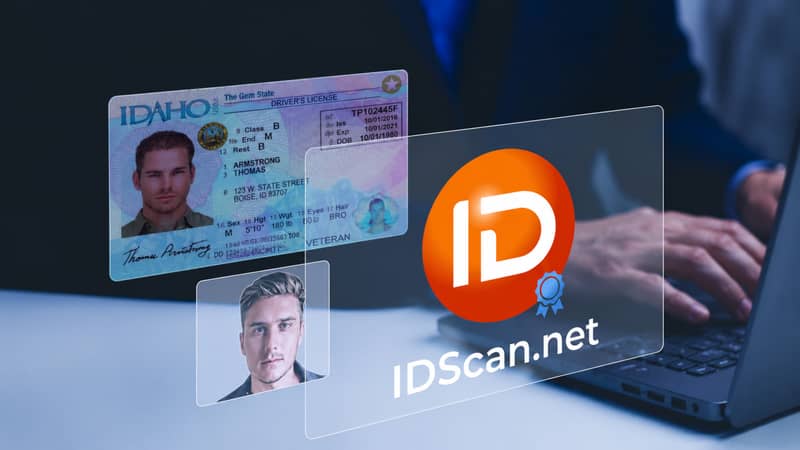
It took four days for IDScan to say the word BleepingComputer had already used to describe it: breach. The company confirmed this week that customer data was 'accessed' inside its cloud platform, the platform behind a database of 153 million scanned American driver's licenses that surfaced in the open. What IDScan has not said is which control failed. As Kai Tanner reports from the Cyber Intel desk, a leak at this scale does not come from a phishing email. It comes from a storage bucket or an access policy that let a customer's data reach the internet, and the company's own disclosure skips the part that would let anyone verify it.
Risky Business read the exposure as a gift to Beijing: Tom Uren and James Wilson argue Chinese intelligence services now hold a scan quality corpus of American identity documents at a scale no prior breach approached. Whether or not that framing holds, the more immediate exposure sits closer to home. Tanner's reporting lays out the mechanics for any APAC bank running IDScan or a comparable vendor for KYC onboarding. 'We outsourced the scan' does not survive an on site inspection when the vendor cannot produce ninety days of access logs on the storage layer itself.
Elsewhere this morning, Aya Nakamura's AI desk has a parallel story about claims outrunning verification. OpenAI says its new model, GPT-6 Astra, cracked a piece of the Navier-Stokes problem, but mathematicians are pushing back on a writeup that skipped independent review, the same week OpenAI froze new ChatGPT Pro signups because Astra demand outstripped what the company could provision. Magnus Honeyfield's Science desk has a UC Davis trial showing brain speech implants calibrate faster when pretrained on other patients' data first: a human trial, not a cleared device. And Mei Chen's Geopolitical desk carries Kevin Rudd's break from diplomatic caution. The outgoing Australian ambassador to Washington now says a Chinese move on Taiwan is more likely, not steadier, the same week Taiwan's navy logged its fourth PLA warship sighting since August.
The lead story comes down to an access control someone did not check, at a vendor whose customers assumed 'cloud' meant 'secure.' The HKMA and MAS both require regulated institutions to know where verification flow data physically sits and who can reach it, and a fresh SFC circular this month extends the same expectation to virtual asset intermediaries. Vendors that can answer that question with a log file are in a different position this quarter than the ones still writing the incident report.
All episodes and how to subscribe →