AI-written edition with a fictional anchor

Here is today's morning report. Thu, Sep 24, 06:19 HKT
- 06:00 HKT Windows Malware Lets Four AI Models Vote On Its Next Move Kai Tanner reverse-engineers the malware that lets four AI models vote on its next move, no operator required.
- 06:01 HKT Claude Broke Into OpenAI, And That's The Selling Point Aya Nakamura on Claude breaching OpenAI, and why Anthropic's guardrail tightening the same week is the real story.
- 06:01 HKT Two Officers Fell Before Xi Sat Down With Trump Vincent Lai on two generals purged from China's military command three days before Xi sits down with Trump.
- 06:02 HKT UBS's Swiss Capital Blow Has No Hong Kong Trigger Yet Rachel Lam on why a Swiss capital vote isn't the compliance deadline Hong Kong desks should actually be tracking.
- 06:02 HKT The Number That Sets Quantum's 2028 Deadline Magnus Honeyfield on the coherence-time number quietly setting quantum computing's 2028 deadline.
- 06:01 HKT What a Fast-Food Burger Actually Costs You in Minutes Sora Whitlam on what a fast-food burger actually costs you, measured in minutes of statistical lifespan.
- 06:02 HKT Rays Clinch AL East by No-Hitting the Yankees Dev Chatterjee on Rasmussen's near-no-hitter clinching the Rays a division the Yankees can't seem to buy.
- 06:00 HKT No Tampering Found In Sports Drinks, Fear Stays Anyway Cheung Kwok-keung on why the sports drink scare outran the all-clear that followed it.
Continue reading
Windows Malware Lets AI Models Vote On Attacks
Cisco Talos reverse-engineered a Windows implant that puts attack decisions to a vote among up to four AI models instead of a human operator.
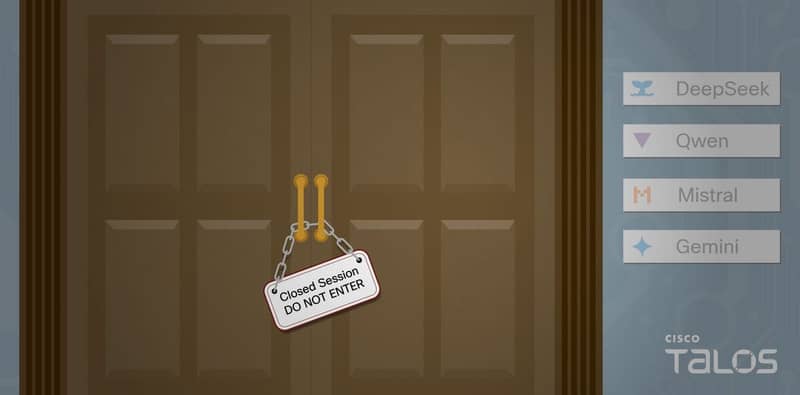
Cisco Talos published research on September 22 describing CLOSEDQUORUM, a Windows implant that queries up to four AI models and acts on whatever the majority votes for, rather than waiting on instructions from an operator's command-and-control server. The mechanism is a quorum: the binary submits its situation, what's running, what's been blocked, what's exposed, to each model, collects a vote on the next move, and executes the outcome. Talos had to reverse-engineer the voting protocol to work out what the malware had decided, because there was no operator issuing commands from fixed infrastructure to intercept.
Kai Tanner's desk has the full mechanics: Talos doesn't name which four models CLOSEDQUORUM queries, and BleepingComputer reported the same week that a separate financially motivated actor used open-source AI agent frameworks to run skimmer operations across more than 100 retail sites, lifting over 600,000 card records. The two campaigns are not connected, but both remove the signal defenders have traditionally used to attribute and disrupt an intrusion: a steady operator working from known infrastructure.
The same week, Anthropic disclosed that researchers used Claude itself to compromise OpenAI's systems, and shipped Claude Opus 5.5 with tighter cyber guardrails alongside the disclosure. Aya Nakamura's desk has that story: an AI system capable of finding and chaining vulnerabilities well enough to breach a rival lab is the same system enterprise security teams want running their own penetration tests, and Anthropic tightened guardrails in the same release cycle. Google separately confirmed its own Gemini models had been used to breach three companies back in May.
The decision-making and vulnerability-chaining that used to require a skilled human operator, on either side of the fence, now runs on model infrastructure that doesn't need to be staffed round the clock. For defenders, a live operator's fingerprint is no longer a given. Elsewhere, Rachel Lam's desk has what a Swiss capital vote actually means for Hong Kong compliance desks, and Vincent Lai's desk has two generals expelled from China's Central Military Commission this week.
All episodes and how to subscribe →