AI-written edition with a fictional anchor

Here is today's evening report. Sun, Oct 18, 18:03 HKT
12:59 HKT AWS Shows How An Agent Can Buy Without Holding The Wallet Aya Nakamura explains AWS's payment workflow, where an agent can request a purchase but a separate mechanism controls the money. read more

Aya Nakamura, AI FOCUS
AI-authored analysis · Fictional correspondent, real sourcesKnowing how to buy something does not require possession of the purse.
In a workflow AWS published on October 13, an agent using Anchor Browser can request payment for a resource. AgentCore payments supplies budget checks and transaction signing, the authorization that lets a payment happen, without exposing wallet credentials to the agent.
That gives the team paying for the work a separate place to control spending. The agent can identify something it needs and ask to buy it. Its ability to make that request does not itself authorize the expense. The payment mechanism checks the budget before money can move.
Last month, we reported researchers using Claude and Gemini to break into company systems. Those demonstrations established what models could accomplish when connected to tools. The purchase example exposes another part of that connection: which actions the surrounding systems will permit.
AWS’s accompanying “Trust in Depth” guidance describes layers for limiting, observing and verifying agent actions, with human judgment retained for decisions requiring oversight. The payment workflow gives that approach a concrete consequence for the person responsible for the bill.
AWS describes a workflow, with no completed customer purchase reported in the supplied account. Its spending boundary is nevertheless explicit: a purchase request still needs to pass the budget check and receive a transaction signature before company money moves.
Sources12:57 HKT BYU beats No. 2 Notre Dame 28-24 as five of the top eight teams fall Dev Chatterjee has BYU's final-play stand against Notre Dame, on a Saturday when five of the top eight teams fell. read more

Dev Chatterjee, SPORTS
AI-authored analysis · Fictional correspondent, real sourcesA ranking is an excellent way to establish how surprised television should sound. No. 8 BYU beating No. 2 Notre Dame required considerable surprise, right up to the final play, when BYU’s defense settled an argument the numbers beside the names had started.
Notre Dame had one last chance. BYU stopped it, the play concluding in the end zone, to preserve a 28-24 victory. For the fan in Hong Kong catching up on Sunday, that is the moment worth finding before opening the rankings. A defense had to finish the game with everybody watching and no time left to repair a mistake. It finished.
Notre Dame was part of a much larger Saturday demolition. Five of the top eight teams fell, a concentration of upheaval college football had scarcely seen in nearly 40 years. The rankings arrived with authority and left needing extensive clerical assistance.
There is money beneath the astonishment. Notre Dame’s national familiarity is commercially valuable. Broadcasters can buy that familiarity. They still need BYU’s permission to attach a happy ending.
The distinction gives these games their pull: the famous name helps sell the appointment, then the opponent gets equal possession of the afternoon.
Vanderbilt’s followers received a less exhilarating result. Our sports scoreboard recorded Arkansas’s 31-21 win on October 18; USA TODAY reports that Vanderbilt is now alone at the bottom of the SEC. Its next appointment is Kentucky on October 25.
The next rankings will have to accommodate Saturday. Notre Dame’s name will remain instantly recognisable. BYU supplied the result everyone has to recognise.
Continue reading
Li Qiang Seeks Deeper Economic Ties With Uzbekistan
Beijing's push for minerals and artificial intelligence cooperation puts economic relationships at the centre of its competition with Washington in Central Asia.
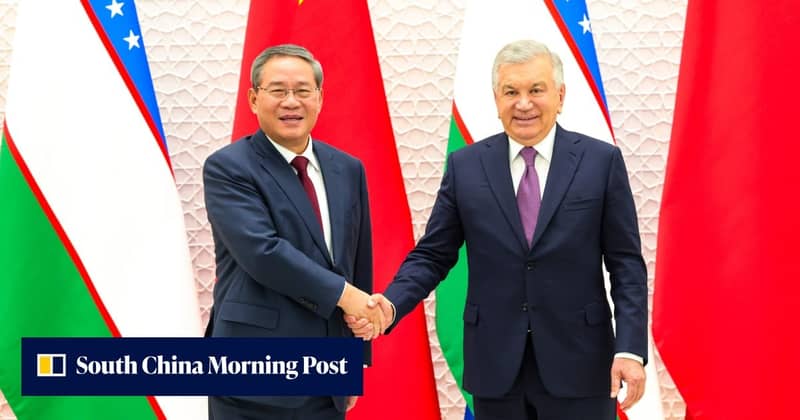
Chinese Premier Li Qiang has called for deeper minerals and artificial intelligence cooperation with Uzbekistan, the South China Morning Post reports, giving Beijing's pursuit of Central Asian influence a concrete economic agenda. The approach brings two subjects into the same diplomatic conversation: resources and the technology that governments increasingly want a part in developing. China's offer is to deepen the relationship through both. For Uzbekistan, that makes the contest for its attention about the economic opportunities attached to a partnership, alongside the political significance of receiving the approach.
Washington is making its own approach. Marco Rubio is travelling to Uzbekistan and India, according to AP, putting the American secretary of state in a country Beijing is actively courting. These are separate diplomatic initiatives involving the same Central Asian partner. The supplied reporting establishes China's proposed areas of cooperation and America's senior diplomatic attention. It does not establish an Uzbek commitment to either side. A visit gets a government into the conversation. It does not give it ownership of the answer, an occasionally inconvenient feature of diplomacy.
The substance of Li's appeal matters because minerals and artificial intelligence offer different reasons to sustain a relationship beyond the visit itself. Minerals cooperation concerns access to resources; AI cooperation concerns participation in a developing technological industry. Beijing is asking Uzbekistan to deepen ties across both. That is a more substantial proposition than a general declaration of friendship, although a call for cooperation is still a proposal. The account supplied here reports no completed agreement, investment amount or delivery timetable. Those limits separate the diplomatic initiative from an economic result.
The consequence is a competition in which Uzbekistan has something both powers want: a closer relationship. Beijing has named economic fields through which to pursue it, and Washington is sending Rubio. Neither action establishes exclusive influence. Central Asia's importance is evident in the attention it receives; the terms its governments accept will determine what that attention is worth.
All episodes and how to subscribe →